Topic 02 · Display walls
Compose a Changing Wall
When one frame on a wall can become anything, everything around it has to stay steady. Height, spacing, finish and the route of a single cable decide whether the wall feels composed or improvised.
Height and centreline
Hang for the eye, not the ceiling
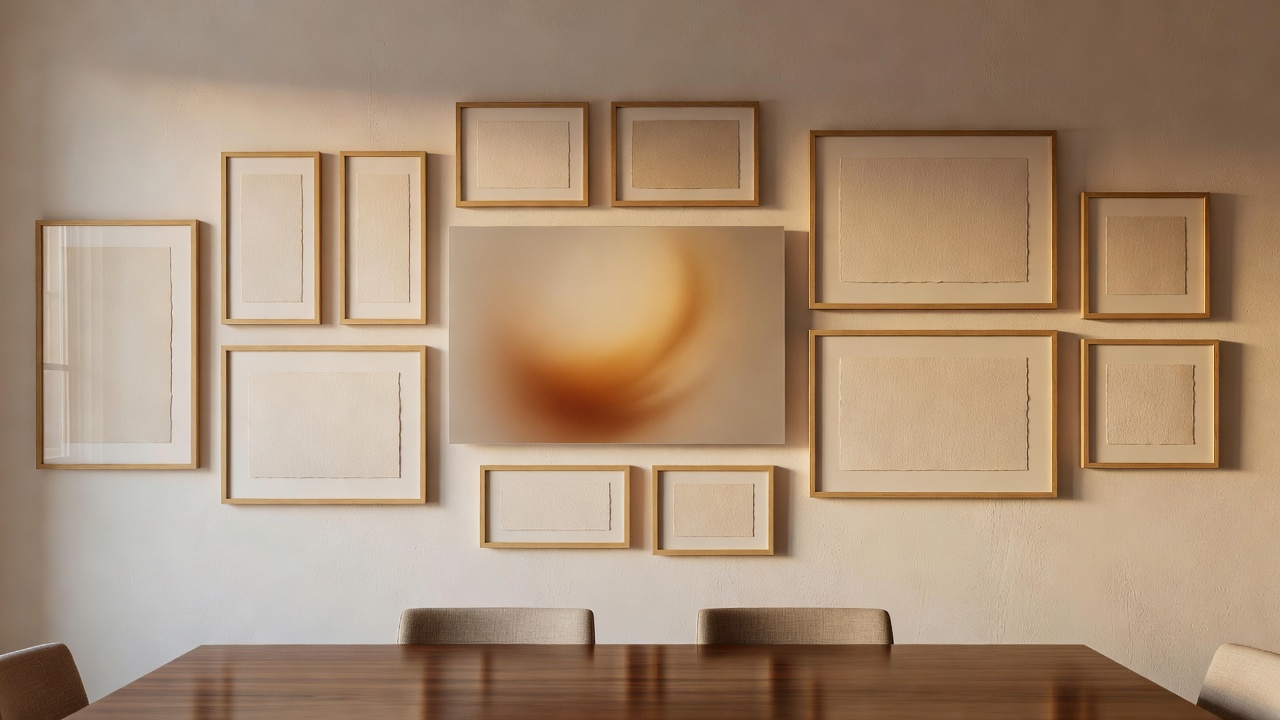
Museums such as Tate Modern and the Victoria and Albert Museum generally hang work so its centre sits somewhere around 145 to 152 cm from the floor — roughly the eye level of a standing adult. At home, the same rule keeps a display from floating too high, which is the most common mistake with wall-mounted screens. A television mounted above a fireplace is almost always too high for art.
In a room where people mostly sit, lower the centreline a little. Above a sofa or sideboard, leave 20 to 25 cm of clear wall between the furniture and the bottom edge so the two read as a pair. If the display joins existing prints, align everything on one shared centreline rather than lining up top edges; the eye reads centres first.
Spacing and finish
Let the wall be the mount
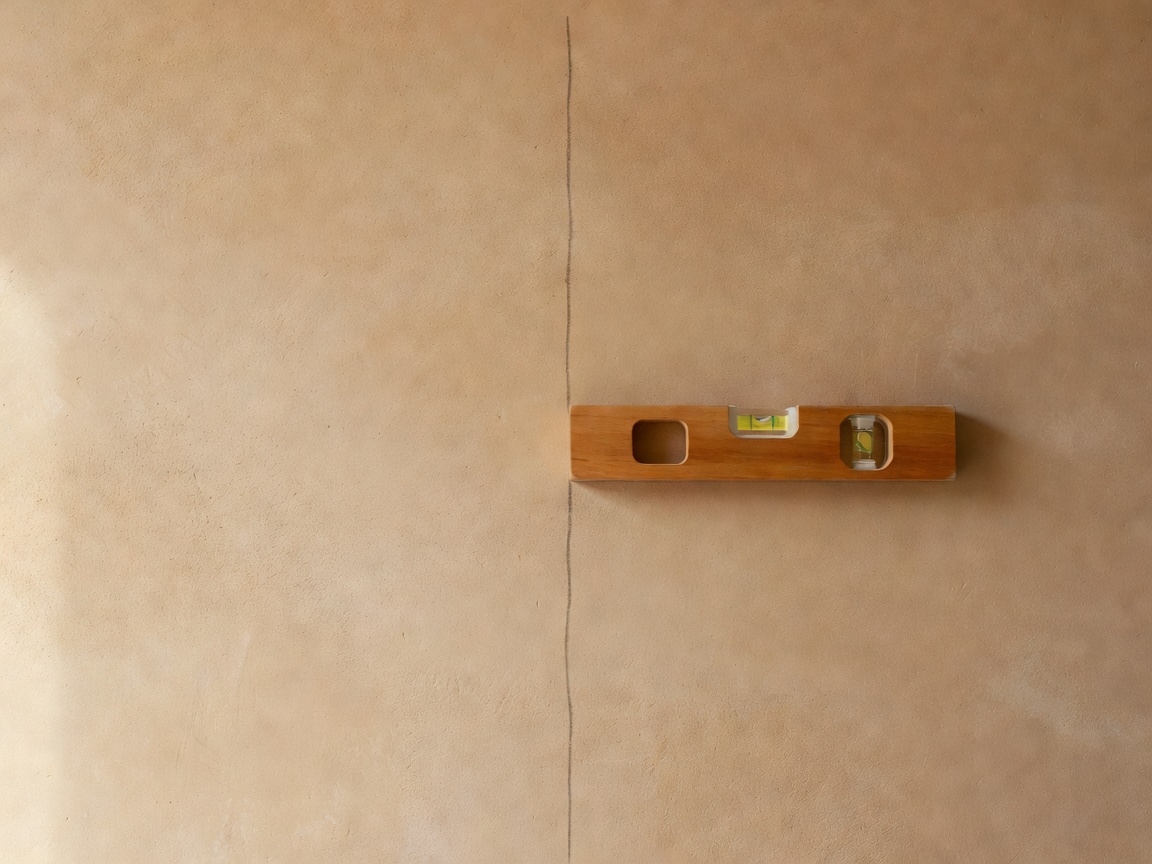
Within a cluster, keep gaps of five to eight centimetres between frames and hold that measurement everywhere. Consistency is what makes a varied group look intentional. Give the digital piece slightly more space than its neighbours, since its image will change and needs a quiet margin.
Wall finish changes how a screen sits. Flat, chalky paints and lime plaster absorb light and flatter a matte panel; satin and gloss paints bounce reflections back onto the screen. Warm off-whites, clay tones and muted olives lower the contrast between wall and display, which makes a dark screen in sleep mode less of a black hole. Josef Albers showed in Interaction of Color how surrounding colour shifts perception; the same is true of a wall around a frame.
Gallery planning
A wall plan in seven steps
Work through these before drilling a single hole. Paper templates are cheap; patching plaster is not.
- Watch the light. Note where sunlight lands on the wall at 9:00, 13:00 and 17:00. Avoid positions directly opposite a large window.
- Find the power. Locate the nearest socket and decide how the cable will reach the frame. This often settles the position on its own.
- Cut templates. Trace each frame and the display onto kraft paper and tape them to the wall.
- Set the centreline. Mark 145 to 152 cm (or lower above furniture) and align template centres to it.
- Live with it. Leave the templates up for two or three days and walk past them as you normally would.
- Check the structure. Use a detector for pipes and cables and choose fixings rated for the display's weight and your wall type.
- Hang the display first. Then arrange printed pieces around it, measuring gaps from the display's actual edge.
Trade-offs
Wall types and what they ask of you
| Wall | Strength | Cable route | Note |
|---|---|---|---|
| Solid brick or block | Holds heavy displays well with masonry fixings | Surface raceway painted to match, or chased channel | Chasing is dusty; plan once |
| Stud partition | Fix into studs for larger screens | In-wall kit with recessed boxes is often possible | Use cables rated for in-wall use |
| Lath and plaster | Fragile; spread the load | Surface raceway safest | Drill slowly; consider a hanging rail |
| Freestanding easel or shelf | No drilling at all | Cable drops behind furniture | Ideal for renters and smaller frames |
Cables
Hiding the one line that gives it away
Nothing breaks the illusion of a framed picture faster than a cable dropping to the skirting board. Options range from slim adhesive raceways, painted the wall colour, to recessed power and low-voltage boxes behind the display. Displays with a separate power unit can often run a single thin lead to a box hidden in a nearby cabinet.
Any work that extends mains wiring should be carried out by a qualified electrician in line with local regulations. Never run an ordinary extension lead inside a wall cavity.
Choosing the display itself? Compare panel types in Find the Right Display.